
Overview
The Onsite Septic Inspection Program is a municipality‑led initiative designed to help protect drinking water, lakes, and the natural environment by ensuring septic systems near shorelines are working properly.
Homes near lakes rely on onsite septic systems to safely treat wastewater. If a system is failing or not functioning as intended, it can allow contaminants to enter groundwater or nearby lakes. These issues are often hidden underground and may go unnoticed without an inspection. This program helps identify potential problems early, before they impact health, the environment, or lead to costly repairs.
Why the Municipality Is Doing This
The Municipality of Grey Highlands is introducing this program to:
- Protect lakes, groundwater, and drinking water sources
- Reduce environmental impacts from failing septic systems
- Support public health and community well‑being
- Help homeowners maintain their systems and avoid unexpected failures
This program is authorized under provincial legislation and follows Ontario Building Code requirements for community septic inspection programs.
What the Inspection Involves
- Inspections are visual and non‑invasive
- An Inspector will review the septic system and the surrounding area
- No digging or excavation is involved
- Inspectors check for signs of leakage, surface discharge, or other concerns
- Property owners may be asked to share any available septic system records
- Septic tank lids must be accessible for the inspection. If lids are buried and the system does not have risers, some digging may be required.
The inspection focuses on ensuring the system is operating safely and as intended under the Ontario Building Code.
What This Means for Homeowners
- Owners will be notified in advance of an inspection
- Inspections are carried out by trained municipal staff
- If concerns are identified, homeowners will receive clear information about next steps
- The goal is prevention and education—not penalties
If repair or maintenance is required, owners are responsible for completing the work, but early detection helps reduce long‑term costs and environmental impacts.
Included Properties
The program applies to properties:
- Located on a lake, or
- Located within 100 metres of a lake shoreline, and
- That use an onsite sewage (septic) system
Lakes included in the program are:
- Eugenia Lake
- Irish Lake
- Wilcox Lake
- Brewster Lake
Some newer systems and certain treatment units with active service agreements may be exempt during specific inspection cycles.
Program Phasing and Timing
The program will be introduced in phases:
- 2026: Pilot program for properties on Eugenia Lake
- Late 2026: Review and reporting to Council
- 2027: Expansion to all identified lakes
This phased approach allows the Municipality to review the program and make improvements before full implementation.
Booking your Inspection
- Inspections will be scheduled during regular business hours (8:30 am - 5:00 pm) Monday through Friday, excluding holidays.
- Inspections are expected to take approximately 1 hour and will be booked for a half-day timeslot, meaning that the inspector could arrive anytime within the scheduled half-day timeslot.
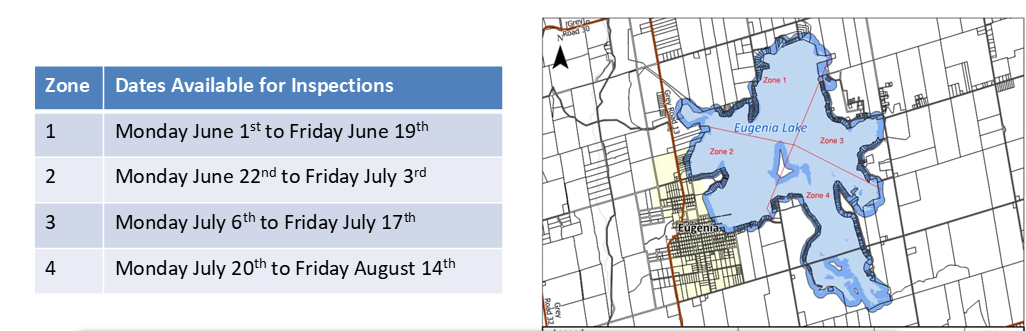
- The dates available for your inspection depend on which zone your property is in, according to the zone map and table below.
- Please book your inspection by emailing ghinspections@rjburnside.com to confirm your inspection date.
FAQ
A septic system that was pumped and “inspected” within the last year this will not be accepted as meeting the requirements of the Septic Re-inspection Pilot Program. It is important to keep the septic re-inspection program consistent with the same review lens for all septic systems that are not exempt within this pilot program. The following septic systems are exempt from inspection under this pilot program:
• An advanced treatment unit with a current inspection completed and submitted to Building Services
• A septic system installed within the last three years
If you believe your septic system falls outside the 100 m catchment, you may submit your septic system’s as-built drawing for review. The submission will be assessed to confirm whether your system qualifies for an exemption.
The Pilot Program will be summarized and presented to Council for review and discussion. Council’s direction following that review will help determine the future of the program, including any ongoing inspection frequency.
The Municipality of Grey Highlands will issue an invoice to the property owner once the inspection is complete.
If you would like to be present but are unavailable during your zone’s scheduled inspection period, an alternate inspection date can be arranged before the end of the scheduled inspections on August 14.
Please still contact Burnside. An alternate inspection date can be arranged before the end of the scheduled inspections on August 14.
The property owner does not need to be present during the inspection; however, the inspector must be able to access the septic system.
Every Sewage System that was installed within 3 years of the commencement of Onsite Septic Inspection Program is exempt from requiring an inspection during the initial phase.
Every Treatment Unit that is under a current service agreement and annual Effluent samples are within the specified parameters is exempt from requiring a Maintenance Inspection as noted in Section 4 of By-law 2026-039 summarized below:
a) The Treatment Unit is under a current service agreement;
b) The annual Effluent samples are within the specified parameters of the Building Code;
c) The location and design of the Treatment Unit is known and on file with the Municipality;
d) The Owner acknowledges that the Treatment Unit continues to be operated the basis on which the construction and use of the Treatment Unit was approved or required under the Act or predecessor legislation, as the case may be, and in accordance with the requirements of the manufacturer of the Treatment Unit; and,
e) The Owner submits the above documents annually to the Chief Building Official.